
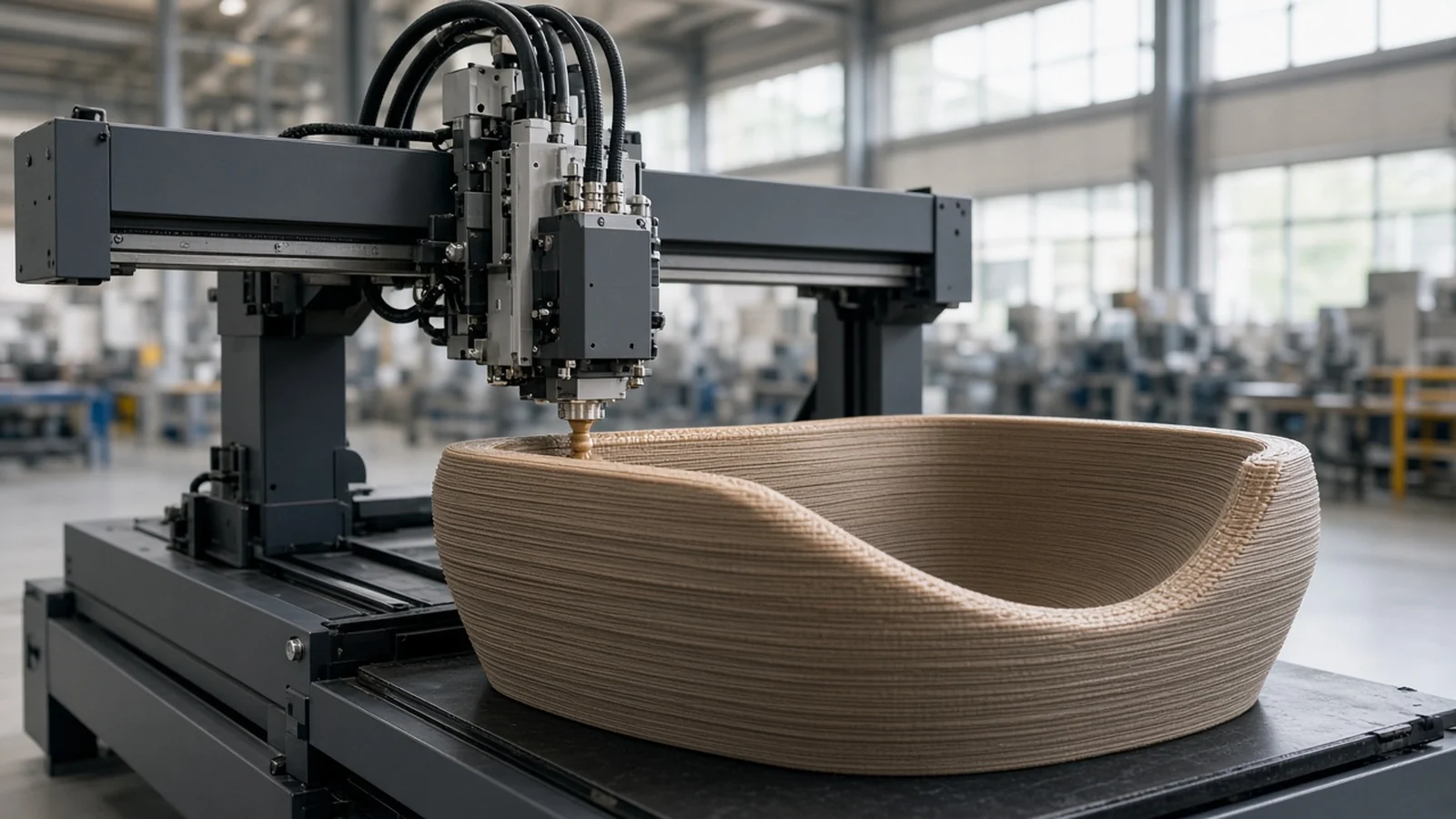
FGF pellet 3D printing feeds 1–5 mm polymer granules straight into a heated screw — skipping spool filament for large fills. For furniture shells, jigs, and short-run production parts, material €/kg and deposition rate often beat enclosed FDM.
1. Where FGF wins
- High polymer volume — seat shells, fixture bases, architectural fills.
- Material cost — pellets are typically cheaper than equivalent filament grades.
- Throughput — thicker beads and higher melt rates for bulky geometry.
Browse enclosed FGF platforms in our industrial 3D printers range (C9–C16 class) and P-series pellet heads.
2. When filament FDM is still better
- Fine features, thin walls, medical housings and anatomical models.
- Engineering filaments that need tight chamber control (ABS, ASA, PC).
- Low daily kg usage where pellet drying and screw maintenance do not pay back.
See also: medical FDM setup and furniture production guide.
3. Production checklist
- Define max envelope and whether parts can be sectioned.
- Confirm pellet grade, drying, and MFI window with a factory trial.
- Plan post-process: machining, sanding, inserts for furniture or tooling.
- Compare total cost per part vs FDM filament for your actual CAD.
4. Hybrid cells
Many shops run FGF for bulk + FDM for precision inserts, or scale up to C40 LSAM / robot cells for meter-scale work. Captive filament extrusion still helps when you keep an FDM farm for detail parts.
Tags: industrial FDM printer, C6 FDM, C9 FDM, engineering filament, production 3D printing, 3D printed furniture, FGF pellet 3D printer, pellet print head, material cost FGF, C16 FGF, furniture FGF, industrial 3D printing, FDM FGF LSAM, filament extrusion, medical 3D printing