
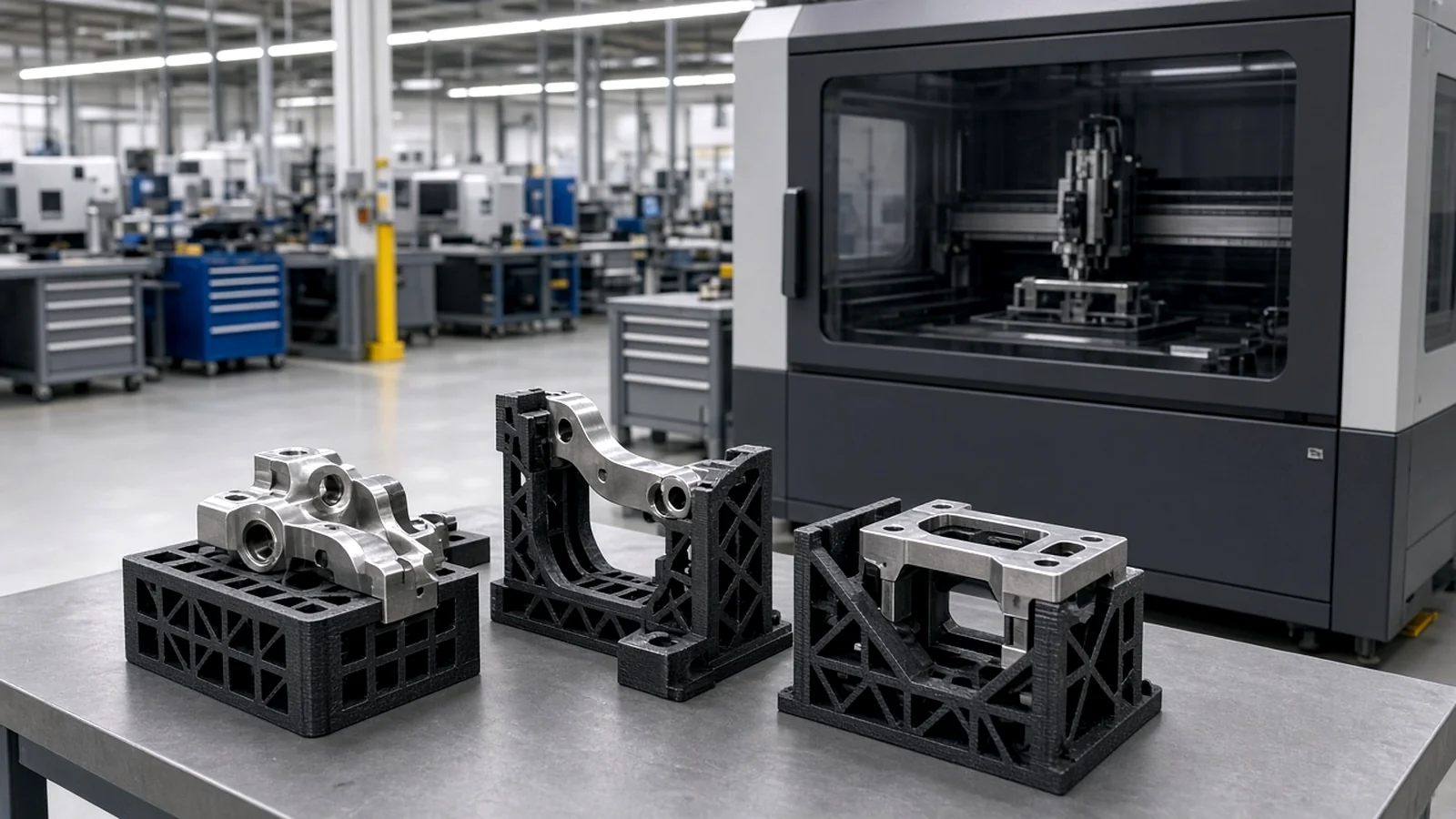
Metal cutting still wins for hardened wear surfaces. For polymer jigs and fixtures, industrial 3D printing usually wins on lead time: print overnight, clamp parts tomorrow. The decision is FDM detail vs pellet FGF volume.
1. Fixture types that print well
- Nest / cradle fixtures for CNC and assembly
- Drill and tap guides with replaceable bushings
- Soft jaws and temporary holding pads
- Poka-yoke gauges and go/no-go checks
2. FDM vs FGF on the shop floor
- Enclosed FDM — tight locating features, small guides, engineering filament.
- Pellet FGF — large nests and bulky bases at lower €/kg.
Start sizing on C6 / C9; step to C12 when nests grow.
3. Design checklist
- Print orientation for stiffness in the clamp axis
- Metal inserts for high-cycle wear points
- Datums that match the real part, not the CAD ideal
- Spare printable pads for quick replacement
See also: application scenarios · compare platforms.
Tags: ម៉ាស៊ីនបោះពុម្ព FDM កម្រិតឧស្សាហកម្ម, C6 FDM, C9 FDM, ជ័រវិទ្យាសាស្ត្រវិស្វកម្ម, បោះពុម្ព 3D សំរាប់ផលិតកម្ម, គ្រឿងសង្ហារឹមបោះពុម្ព 3D, បោះពុម្ព 3D កម្រិតឧស្សាហកម្ម, FDM FGF LSAM, ការបញ្ចេញជ័រ, បោះពុម្ព 3D វេជ្ជសាស្ត្រ, បោះពុម្ព 3D បែបចម្លាក់, រោងចក្រជ័រហ្ស៊ី local, QS3Dmachine