
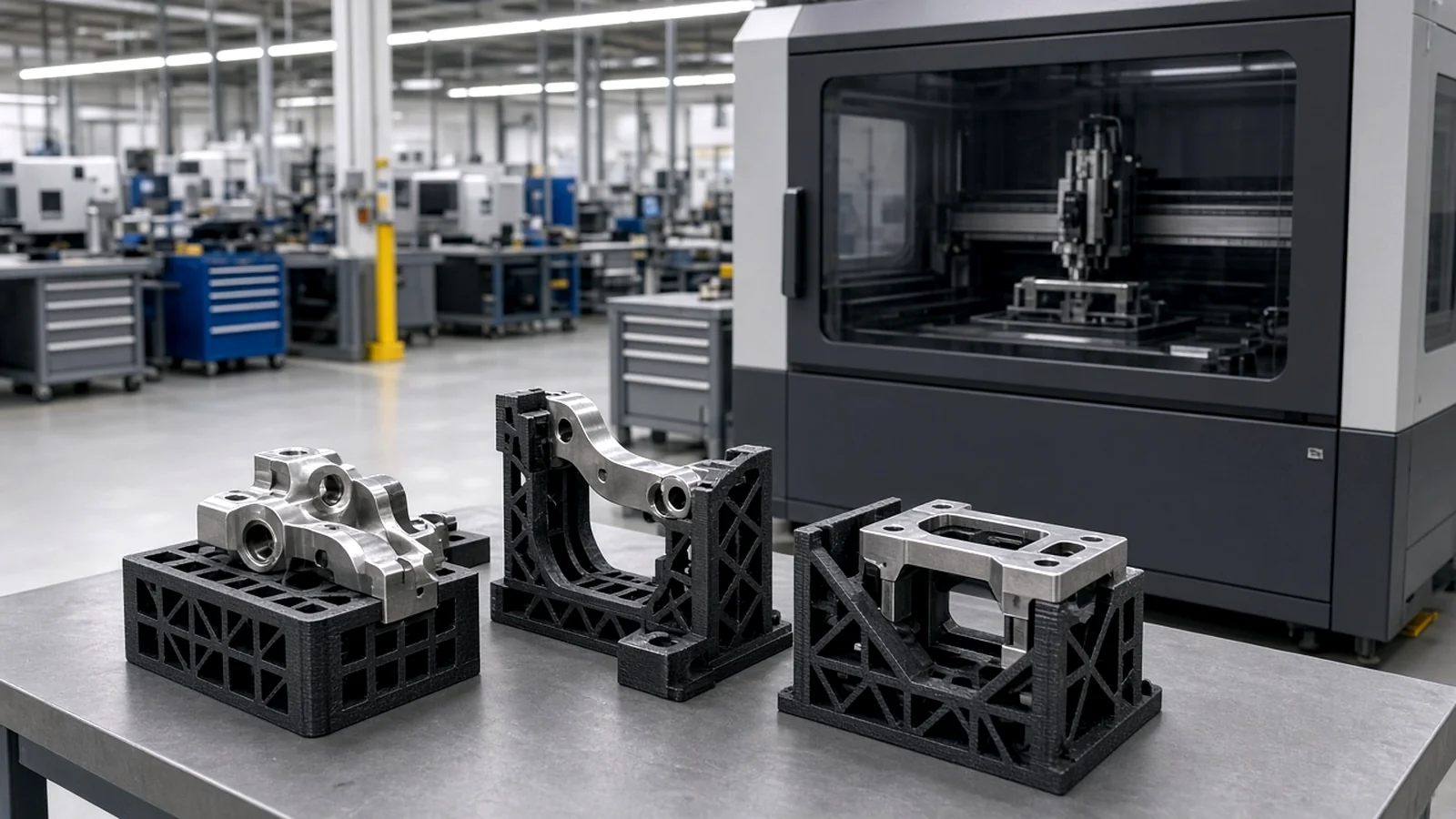
Metal cutting still wins for hardened wear surfaces. For polymer jigs and fixtures, industrial 3D printing usually wins on lead time: print overnight, clamp parts tomorrow. The decision is FDM detail vs pellet FGF volume.
1. Fixture types that print well
- Nest / cradle fixtures for CNC and assembly
- Drill and tap guides with replaceable bushings
- Soft jaws and temporary holding pads
- Poka-yoke gauges and go/no-go checks
2. FDM vs FGF on the shop floor
- Enclosed FDM — tight locating features, small guides, engineering filament.
- Pellet FGF — large nests and bulky bases at lower €/kg.
Start sizing on C6 / C9; step to C12 when nests grow.
3. Design checklist
- Print orientation for stiffness in the clamp axis
- Metal inserts for high-cycle wear points
- Datums that match the real part, not the CAD ideal
- Spare printable pads for quick replacement
See also: application scenarios · compare platforms.
Tags: stampante FDM industriale, C6 FDM, C9 FDM, filamento ingegneristico, stampa 3D di produzione, mobili stampati in 3D, stampa 3D industriale, FDM FGF LSAM, estrusione di filamento, stampa 3D medica, stampa 3D di sculture, fabbrica di filamento locale, QS3Dmachine