
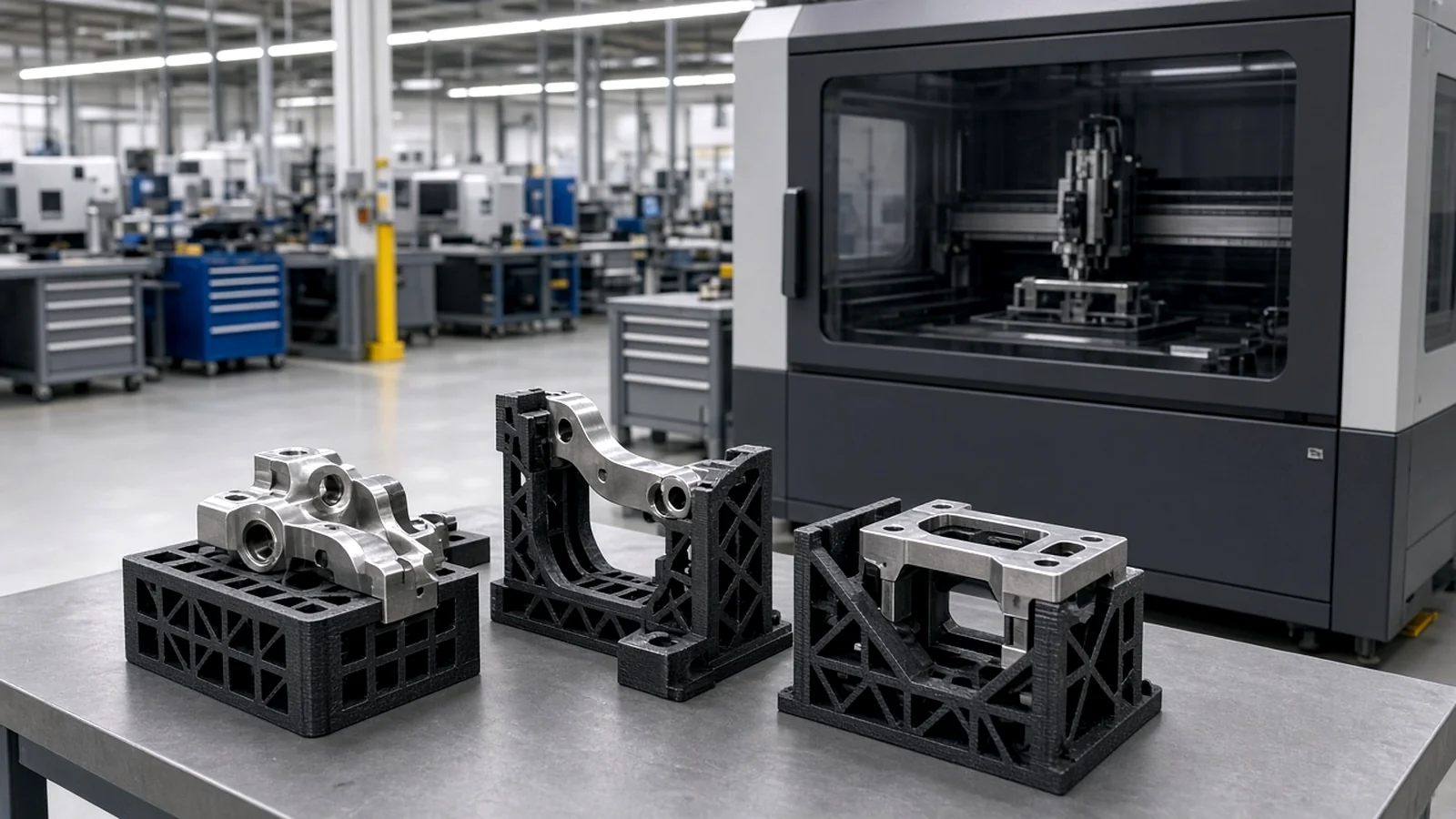
Metal cutting still wins for hardened wear surfaces. For polymer jigs and fixtures, industrial 3D printing usually wins on lead time: print overnight, clamp parts tomorrow. The decision is FDM detail vs pellet FGF volume.
1. Fixture types that print well
- Nest / cradle fixtures for CNC and assembly
- Drill and tap guides with replaceable bushings
- Soft jaws and temporary holding pads
- Poka-yoke gauges and go/no-go checks
2. FDM vs FGF on the shop floor
- Enclosed FDM — tight locating features, small guides, engineering filament.
- Pellet FGF — large nests and bulky bases at lower €/kg.
Start sizing on C6 / C9; step to C12 when nests grow.
3. Design checklist
- Print orientation for stiffness in the clamp axis
- Metal inserts for high-cycle wear points
- Datums that match the real part, not the CAD ideal
- Spare printable pads for quick replacement
See also: application scenarios · compare platforms.
Tags: industrial FDM printer, C6 FDM, C9 FDM, engineering filament, production 3D printing, 3D printed furniture, industrial 3D printing, FDM FGF LSAM, filament extrusion, medical 3D printing, sculpture 3D print, local filament factory, QS3Dmachine