
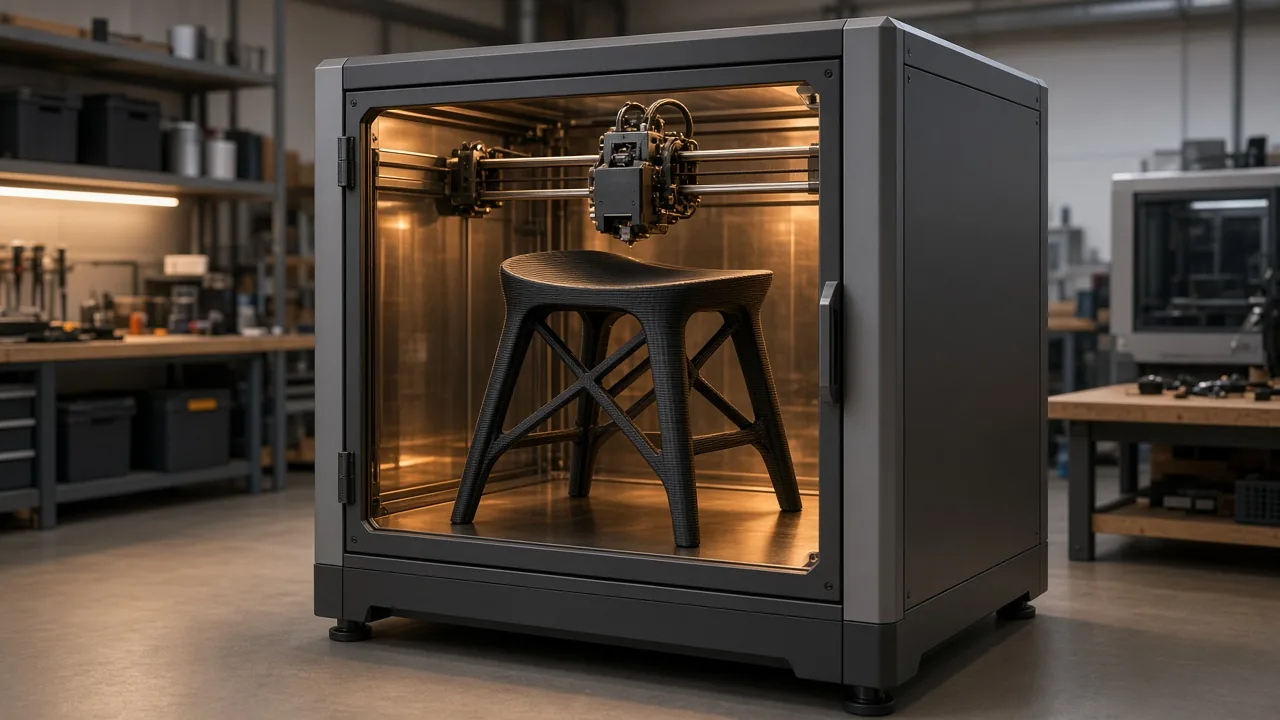
Not every furniture job needs meter-scale FGF on day one. Many studios win with enclosed industrial FDM for short runs of brackets, connectors, armrest inserts, and appearance samples — then add pellet FGF only when shell mass makes filament €/kg painful.
1. What belongs on enclosed FDM
- Hardware interfaces, clips, and jigged assembly aids
- Visible hand-board panels where layer lines will be finished
- Small seating components that fit C6–C12 envelopes
- Color or texture trials before locking a FGF recipe
Platform picker: C6–C16 series guide. Broader furniture context: furniture buyer guide.
2. Chamber and material recipes that stick
- ABS / ASA — keep an actively heated enclosure; draft kills corner bond
- PC / engineering blends — confirm HT-class chamber before promising glass-filled looks
- Dry filament — same discipline as pellets; wet stock ruins gloss and strength
- Nest by wall thickness — batch similar sections so chamber time stays predictable
3. When to add FGF on the same floor
Move bulky shells, seat bases, and large interior fixtures to pellet FGF once monthly polymer kg climbs or filament spool changes dominate labor. Hybrid layouts are covered in hybrid FDM + FGF cells.
4. Next step
Send your part envelope and monthly count — we recommend FDM-only vs hybrid and return a QS-branded quote pack.
Tags: industrial FDM printer, C6 FDM, C9 FDM, engineering filament, production 3D printing, 3D printed furniture, industrial 3D printing, FDM FGF LSAM, filament extrusion, medical 3D printing, sculpture 3D print, local filament factory, QS3Dmachine