
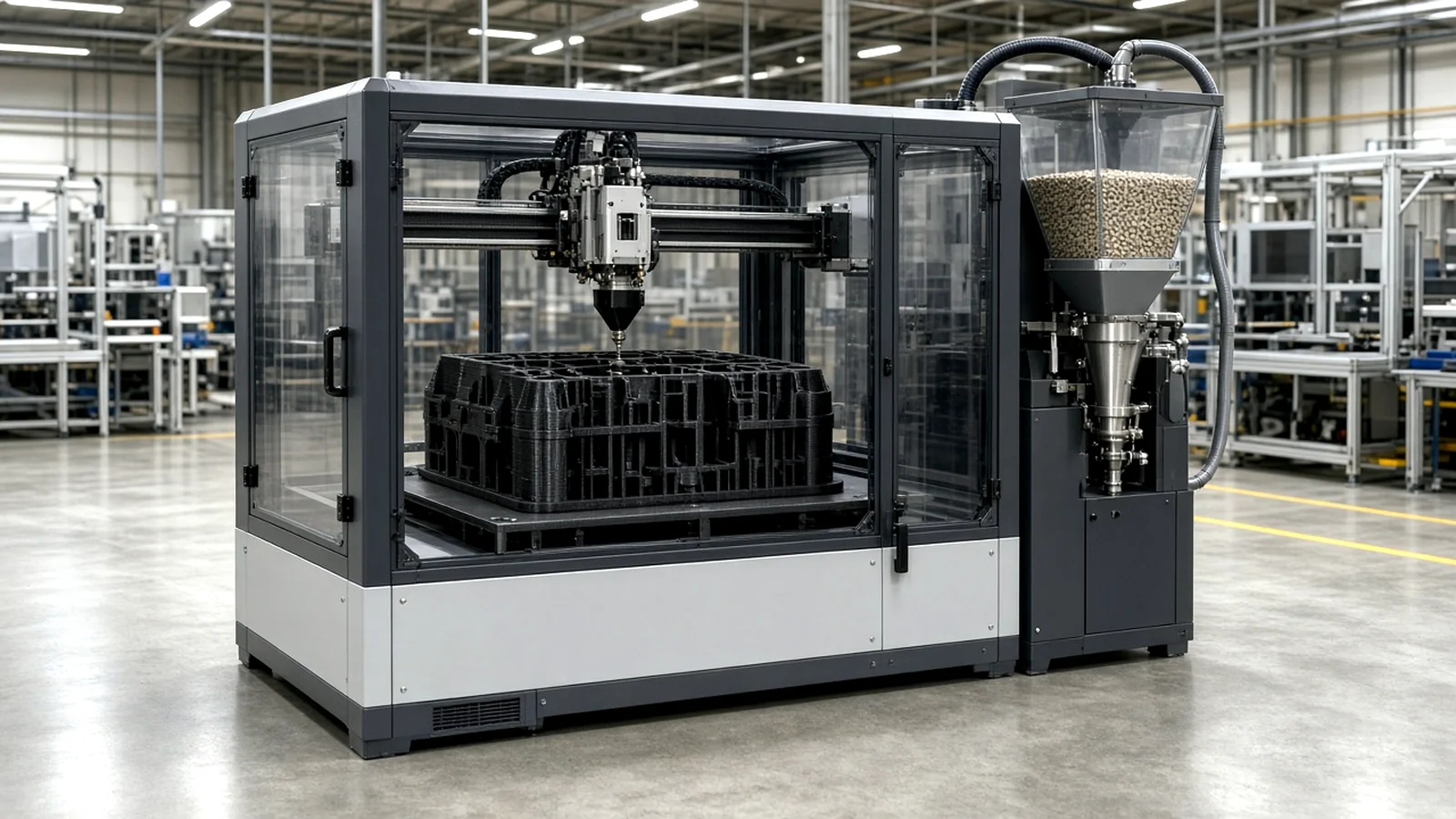
One technology rarely covers every job. Hybrid cells keep enclosed FDM for fine medical and housing features, and add pellet FGF for bulky fixtures and furniture shells — the pattern we see most in QS source-factory deployments.
1. Why hybrid beats “one big machine”
- Filament wins thin walls, logos, and brace detail
- Pellets win kg throughput and material cost
- Shared operators and spare parts across C-series platforms
2. Utilities that stay simple
QS pellet platforms support auto suction without a dedicated air compressor for basic feed — useful when the FDM side already fills the electrical budget. Still plan dryers sized to daily kg for both filament and pellets.
3. Example layouts
- Brace lab — C6/C9 FDM + small FGF for shell blanks
- Furniture studio — C9/C12 FGF + FDM for inserts
- Job shop — C12 FGF fixtures + FDM prototypes side by side
Factory story: source factory overview · series picker: C6–C16 guide.
4. Next step
Send your part list — we recommend a hybrid pair and send a QS-branded quote pack (no third-party PDFs).
Tags: industrial 3D printing, FDM FGF LSAM, filament extrusion, 3D printed furniture, medical 3D printing, sculpture 3D print, local filament factory, QS3Dmachine