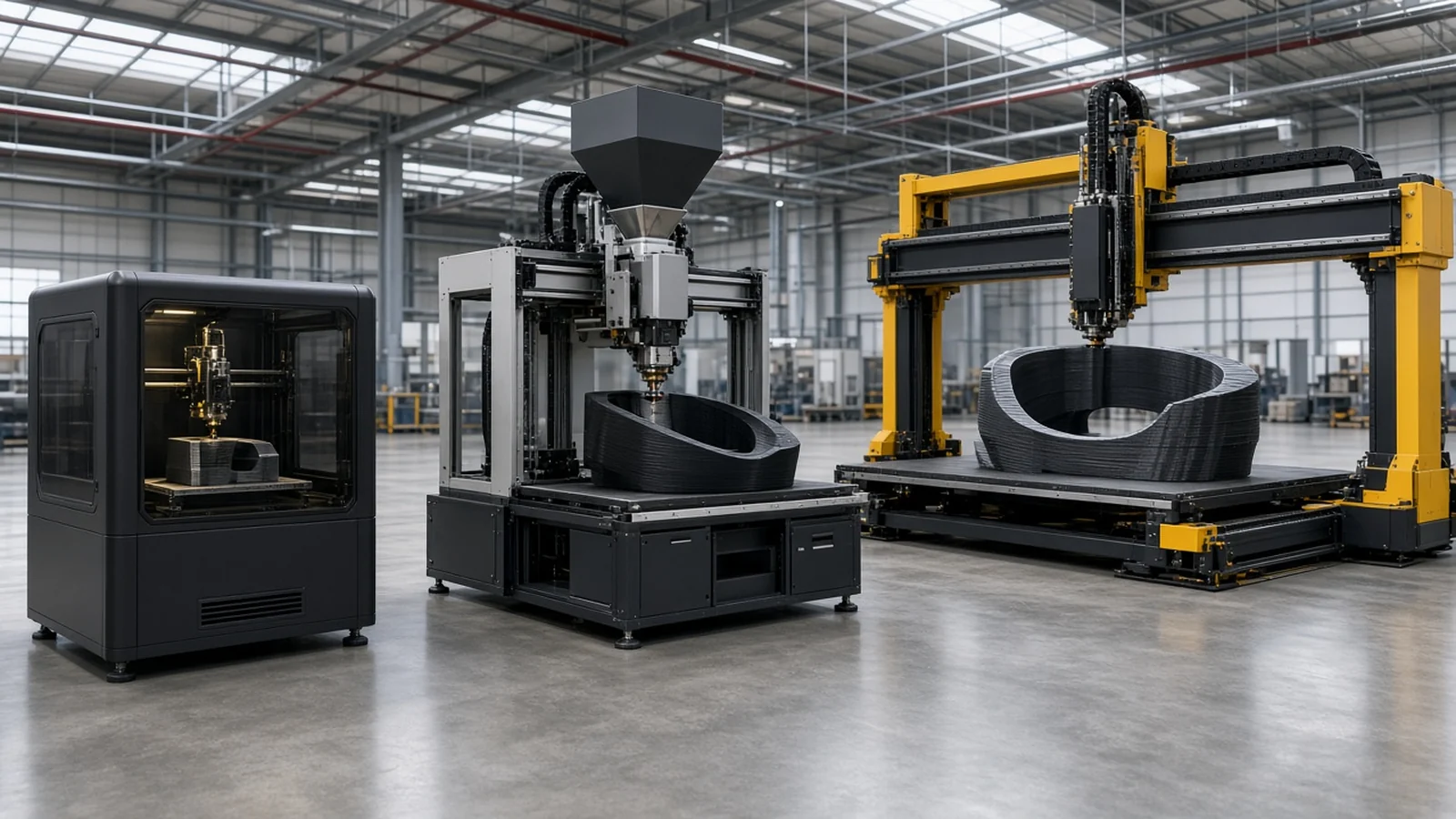
Industrial additive manufacturing is no longer limited to aerospace jigs. Furniture brands, medical device teams, and sculpture studios now specify enclosed FDM, pellet FGF, and large-format LSAM platforms to cut tooling cost, shorten iteration cycles, and produce one-off or short-run pieces that CNC alone cannot justify.
1. Furniture: custom seating, fixtures, and architectural fills
Design furniture and interior brands use industrial 3D printing for:
- Parametric seating & lighting — lattice shells and organic forms that are expensive to mold.
- Showroom fixtures & retail displays — brand-specific shapes without steel tooling.
- Architectural inserts — wall panels, acoustic parts, and facade prototypes.
Enclosed FDM / FGF printers (C6–C16 class) suit mid-size furniture components and furniture-grade polymers. For meter-scale chairs, benches, or outdoor sculpture-furniture hybrids, C40 LSAM or robot cells with pellet heads keep material cost down versus spool filament.
2. Medical devices: models, jigs, and custom interfaces
Medical and dental labs increasingly need:
- Anatomical models for surgical planning and training (rigid and flexible grades).
- Jigs, guides & fixtures for assembly or clinical workflows.
- Patient-specific interfaces — orthotics trials, housings, and ergonomic grips (subject to local regulatory pathways).
Enclosed, temperature-controlled FDM platforms help with engineering plastics (ABS, ASA, PC) and dimensional stability. Clean-room adjacent shops also value sealed chambers and predictable filament drying — often supported by a captive filament extrusion line for controlled batches.
3. Sculpture & cultural projects: from maquette to monument
Artists and foundries use additive manufacturing to:
- Print large maquettes for client approval before casting.
- Build lost-pattern shells or molds for metal/resin casting.
- Deliver permanent polymer sculptures for outdoor or indoor install.
Pellet FGF and LSAM excel when part size exceeds 1–2 m and material volume is high. Robot additive cells add milling for surface finish on sculpture skins.
4. How to choose FDM vs FGF vs LSAM
| Need | Prefer |
|---|---|
| Fine detail, medical housings, furniture connectors | Enclosed FDM (C6 / C9 / C12) |
| Large furniture shells, high polymer volume, lower cost/kg | FGF pellet (C9–C16) or LSAM |
| Meter-scale sculpture / outdoor pieces | C40 LSAM or robot + pellet head |
| Controlled filament grades for medical/furniture fleets | KBL filament extrusion + FDM farm |
Read the platform overview: FDM vs FGF vs LSAM.
5. Project checklist before you buy
- Define max part envelope, annual polymer tonnage, and finish level (as-printed vs machined).
- Confirm material certifications needed for medical or furniture markets.
- Plan utilities: power, enclosure exhaust, pellet drying, and floor load for gantries.
- Request a trial print with your CAD — not a generic demo part.
Tags: industrial FDM printer, C6 FDM, C9 FDM, engineering filament, production 3D printing, 3D printed furniture, industrial 3D printing, FDM FGF LSAM, filament extrusion, medical 3D printing, sculpture 3D print, local filament factory, QS3Dmachine