
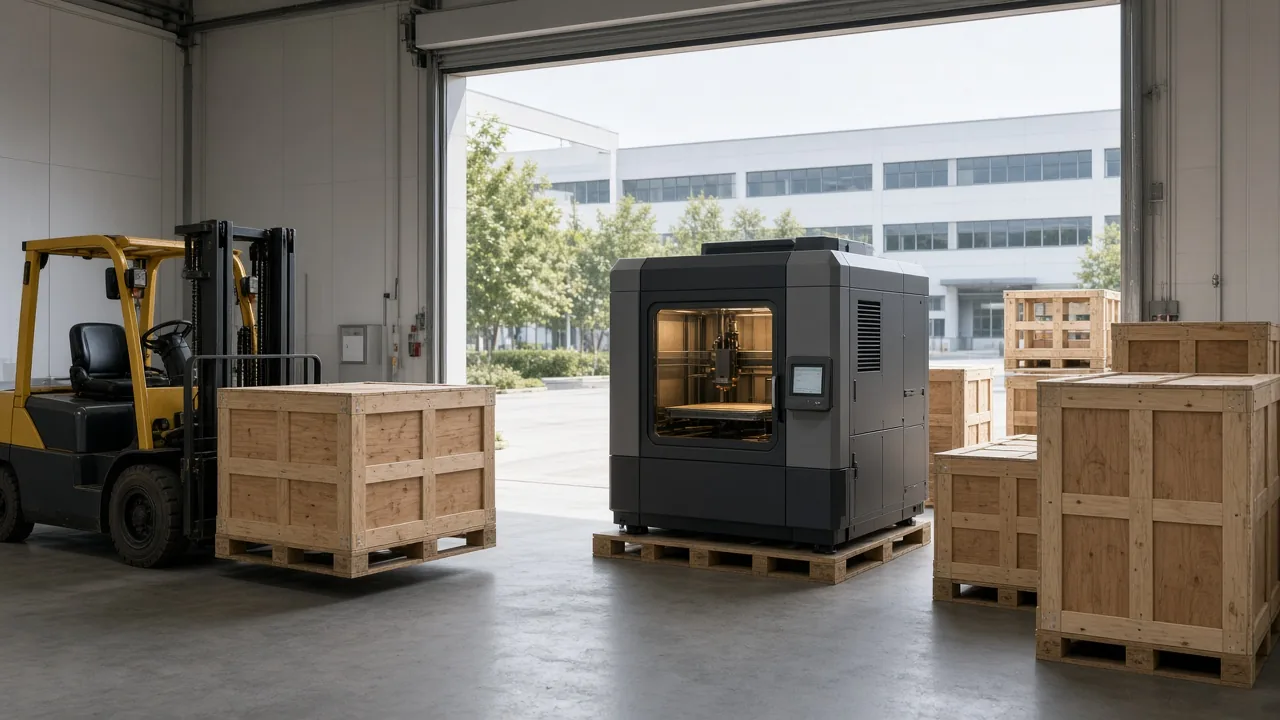
Buying an industrial 3D printer from China is less about the brochure and more about the handoff: FAT video, crate plan, voltage, and who shows up for install. Use this checklist when sourcing QS enclosed FDM/FGF, pellet heads, robot cells, or C40 LSAM.
1. Lock the configuration before deposit
- Series and envelope (C6–C16, robot, or C40) — see series picker
- FDM vs FGF (or hybrid cell) and pellet head class if FGF
- Chamber / high-temp options for ABS, ASA, PC, PA and beyond
- Voltage / frequency for your plant (confirm 3-phase needs in writing)
- Language of HMI, manuals, and remote support hours
2. Factory acceptance (FAT)
- Print your sample geometry or a agreed witness part on video / live call
- Confirm dryer + auto-feed behavior with your pellet or filament grade
- Photograph nameplates, serials, and packing list before sealing crates
3. Shipping & site readiness
- Crate dimensions, gross weight, and forklift / crane access at destination
- Floor loading, power drop, and dryer placement before the truck arrives
- Spare nozzles, heaters, belts, and first-year wear parts in the same shipment
- Commercial invoice, packing list, and CO / other docs your broker needs
4. After arrival
Plan commissioning days, operator training, and a short production recipe log (moisture, temps, speeds). QS source-factory support is based in Foshan — keep WhatsApp/phone contacts on the install sheet.
Request a quote pack with your voltage, material list, and target part size. We reply with a QS-branded configuration (no third-party PDFs).
Tags: industrial FDM printer, C6 FDM, C9 FDM, engineering filament, production 3D printing, 3D printed furniture, industrial 3D printing, FDM FGF LSAM, filament extrusion, medical 3D printing, sculpture 3D print, local filament factory, QS3Dmachine